
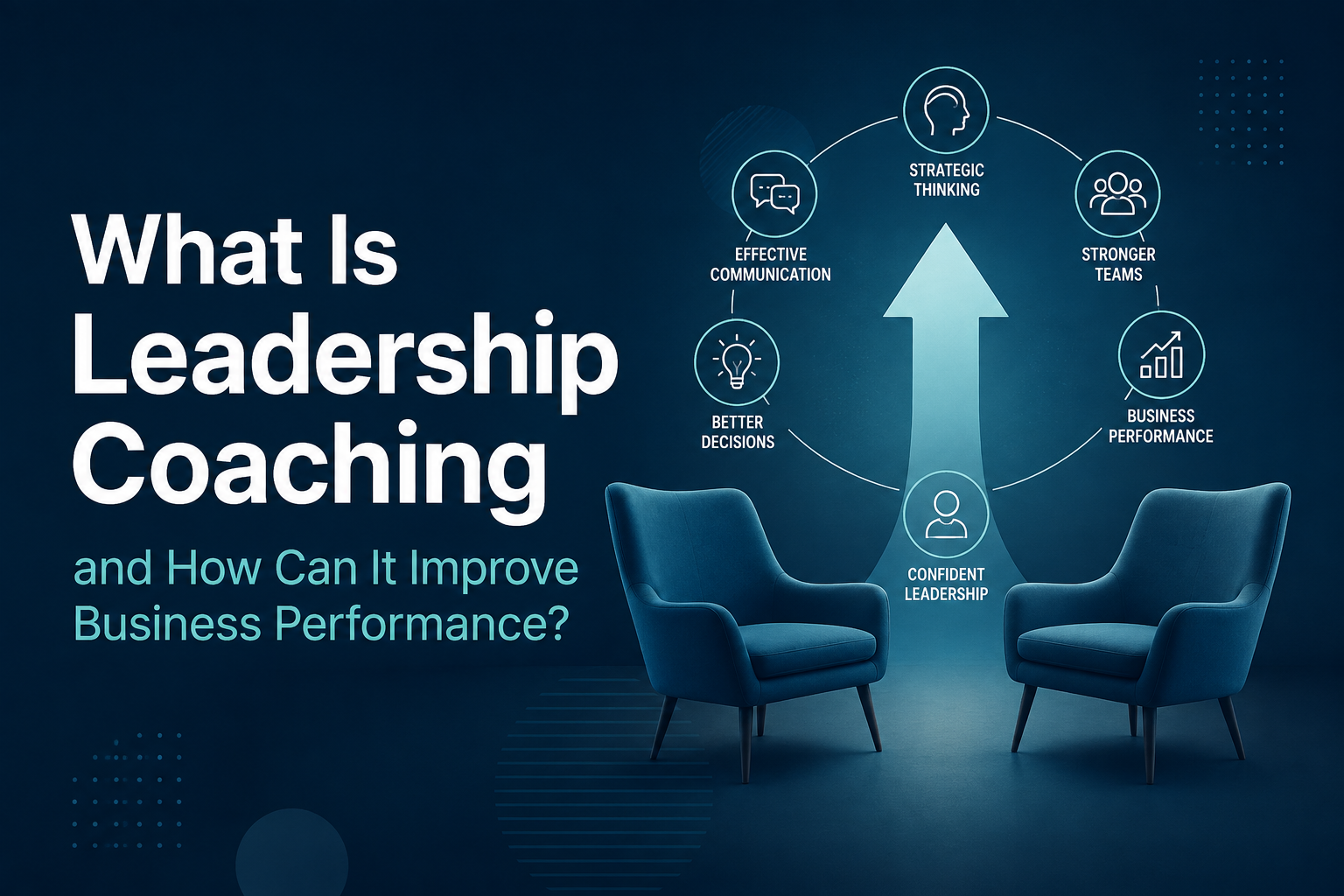
Strong leadership is one of the biggest factors influencing the success of any organisation. While businesses often invest in technology, processes and recruitment, the effectiveness of their leaders ultimately determines how well teams perform, how decisions are made and how organisations adapt to change.
Leadership coaching has become an increasingly valuable investment for organisations looking to develop confident, capable leaders who can inspire others, improve performance and create lasting cultural change. Rather than offering generic advice or one size fits all solutions, leadership coaching focuses on helping individuals unlock their own potential and develop the skills needed to lead effectively in today’s complex business environment.
In this guide, we’ll explain what leadership coaching is, who it is designed for, how it differs from mentoring and training, and why it can have such a significant impact on business performance.
What Is Leadership Coaching?
Leadership coaching is a structured, personalised development process that helps individuals improve their leadership capabilities through guided conversations, reflection and practical action.
Unlike traditional teaching methods, coaching does not simply provide answers. Instead, an experienced coach works alongside leaders to help them identify challenges, explore different perspectives and develop their own solutions. This approach builds confidence, accountability and long term behavioural change.
Leadership coaching typically focuses on areas such as:
- Strategic thinking
- Decision making
- Communication skills
- Emotional intelligence
- Managing change
- Building resilient teams
- Conflict resolution
- Personal effectiveness
- Influencing others
- Leading organisational transformation
The aim is not simply to improve an individual’s leadership style but to create positive outcomes that benefit the wider organisation.
Who Is Leadership Coaching For?
A common misconception is that leadership coaching is only for senior executives. In reality, coaching can benefit leaders at every stage of their career.
Leadership coaching is particularly valuable for:
New Managers
Moving from an operational role into management often requires an entirely different skill set. Coaching helps new managers develop confidence while learning how to motivate, delegate and support their teams.
Experienced Leaders
Even highly experienced leaders face new challenges as organisations evolve. Coaching provides a confidential environment to reflect on decisions, refine leadership approaches and adapt to changing business needs.
Executive Teams
Senior leadership teams often benefit from coaching that strengthens collaboration, improves communication and aligns strategic priorities across the organisation.
Future Leaders
Organisations investing in succession planning frequently use leadership coaching to prepare high potential employees for future leadership responsibilities.
Leaders Managing Change
Periods of transformation, growth, restructuring or cultural change require confident leadership. Coaching supports leaders in managing uncertainty while maintaining engagement across their teams.
Leadership Coaching vs Mentoring vs Training
Although these terms are often used interchangeably, they serve very different purposes.
Leadership Coaching
Leadership coaching focuses on helping individuals discover their own solutions. Coaches ask insightful questions, encourage reflection and support behavioural change without telling someone exactly what to do.
The emphasis is on personal growth, self awareness and sustainable development.
Mentoring
Mentoring generally involves someone with significant experience sharing their knowledge and advice. A mentor often acts as a guide, helping someone navigate similar situations based on their own experiences.
Mentoring is particularly useful when developing industry knowledge or career progression.
Leadership Training
Training provides structured learning around specific topics such as communication, project management or performance management.
Participants learn new techniques and frameworks that can then be applied in their roles.
While training builds knowledge, coaching helps individuals apply that knowledge effectively within their own unique circumstances.
Many organisations achieve the greatest results by combining leadership training with ongoing coaching support.
How Leadership Coaching Improves Business Performance
The benefits of leadership coaching extend far beyond individual development. Effective leadership influences every aspect of an organisation, from employee engagement to productivity and customer satisfaction.
Better Decision Making
Leaders make hundreds of decisions every week.
Coaching encourages leaders to slow down, consider different perspectives and evaluate potential outcomes before acting. This leads to more balanced, informed and confident decision making.
Over time, better decisions contribute to improved operational performance and stronger business results.
Stronger Employee Engagement
Employees are more likely to remain motivated when they trust and respect their leaders.
Leadership coaching helps managers communicate more effectively, listen actively and build stronger relationships with their teams. This creates an environment where employees feel valued, understood and supported.
Higher engagement often leads to increased productivity, improved retention and reduced absenteeism.
Improved Communication
Poor communication is one of the most common causes of workplace conflict and reduced performance.
Leadership coaching develops communication skills that enable leaders to:
- Deliver clear direction
- Provide constructive feedback
- Handle difficult conversations confidently
- Encourage collaboration
- Build trust across teams
Clear communication creates stronger alignment throughout the organisation.
Increased Adaptability
Modern organisations operate in rapidly changing environments.
Leadership coaching helps individuals become more adaptable by improving resilience, encouraging innovation and developing confidence when navigating uncertainty.
This allows organisations to respond more effectively to changing markets, customer expectations and internal challenges.
Greater Accountability
Coaching encourages leaders to take ownership of their actions, behaviours and outcomes.
By setting clear goals and reviewing progress regularly, leaders become more accountable for delivering meaningful improvements that positively influence both their teams and the wider organisation.
Supporting Stronger Teams
Leadership directly affects team performance.
When leaders understand how to motivate individuals, encourage collaboration and build psychological safety, teams are more likely to perform at a consistently high level.
Leadership coaching helps leaders:
- Understand different working styles
- Build trust within teams
- Delegate effectively
- Resolve conflict constructively
- Encourage innovation
- Improve team morale
As leadership improves, team performance often improves alongside it.
Rather than relying on authority alone, coached leaders learn how to empower people to contribute their best work.
Creating Lasting Organisational Change
Many change initiatives fail because organisations focus on processes rather than behaviours.
Successful transformation depends on leaders who can inspire confidence, communicate a compelling vision and support people through uncertainty.
Leadership coaching develops these capabilities.
Instead of implementing temporary fixes, coaching helps leaders establish sustainable behaviours that become embedded within organisational culture.
This creates long term improvements across areas including:
- Collaboration
- Innovation
- Accountability
- Employee wellbeing
- Customer experience
- Organisational resilience
Over time, these behavioural changes contribute to stronger business performance and a healthier workplace culture.
When Should Organisations Invest in Leadership Coaching?
Although leadership coaching delivers value at any stage, there are certain situations where organisations often experience particularly strong returns.
These include:
- Rapid business growth
- Leadership transitions
- Organisational restructuring
- Cultural transformation programmes
- Succession planning
- Mergers and acquisitions
- Developing future leaders
- Improving employee engagement
- Managing underperforming teams
- Supporting executive leadership
Rather than waiting until problems arise, many organisations now view leadership coaching as a proactive investment that strengthens capability before challenges emerge.
Why Leadership Coaching Delivers Long Term Value
Unlike short term training interventions, leadership coaching focuses on changing behaviours that continue to benefit organisations long after the coaching programme has finished.
Leaders become more self aware, more resilient and more capable of handling increasingly complex situations.
As these leaders influence others, the benefits spread throughout the organisation, creating stronger teams, improved collaboration and better overall performance.
This ripple effect is one of the reasons leadership coaching continues to grow in popularity across both private and public sector organisations.
Partner with Engage for Impact
At Engage for Impact, we believe that exceptional organisations are built by exceptional leaders. Our leadership coaching programmes are designed to help individuals and teams develop the confidence, clarity and capability needed to create meaningful and lasting organisational change.
Whether you’re developing new managers, supporting senior leaders or leading a major transformation, our evidence based coaching approach helps unlock potential, strengthen leadership capability and improve business performance.
By investing in leadership coaching today, organisations can build more resilient leaders, create stronger teams and establish the foundations for sustainable success tomorrow.